Understanding how 316L stainless steel performs in water helps avoid surprises during everyday wear. In environments involving sweat, seawater, or swimming pools, small differences in alloy composition can have a significant impact on durability and maintenance. With simple routines, you can preserve the finish for much longer.
316L Stainless Steel in Water: the essentials in 30 seconds
- 316L contains molybdenum and a low carbon content, which improves resistance to chlorides.
- In real-world use, it performs well with sweat, rain, and frequent splashes.
- After exposure to seawater or pool water, it should be rinsed with fresh water and dried.
- It does not fade: its shine comes from the material itself, not from a surface coating.
Corrosion and Chlorides: Why 316L Has an Advantage
Chromium creates a protective passive layer. With the addition of molybdenum, 316L offers better resistance to chloride-rich environments (seawater, sweat, salt air), reducing pitting and localized staining. As a result, in coastal areas and active lifestyles involving regular exercise, 316L remains stable for longer than alloys without molybdenum.
316L Stainless Steel in Water and Sweat: What to Expect in Everyday Wear
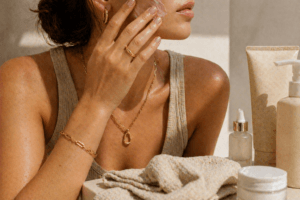
Sweat contains salts and acids that can accelerate wear on less stable metals. With 316L stainless steel, nickel release is generally low, and the finish remains predictable with basic cleaning. After intense workouts, rinse with fresh water and dry thoroughly; this helps remove residue and preserve shine. Learn more here: protecting 316L stainless steel from sweat and cosmetics.
316L Stainless Steel in Seawater and Pool Water
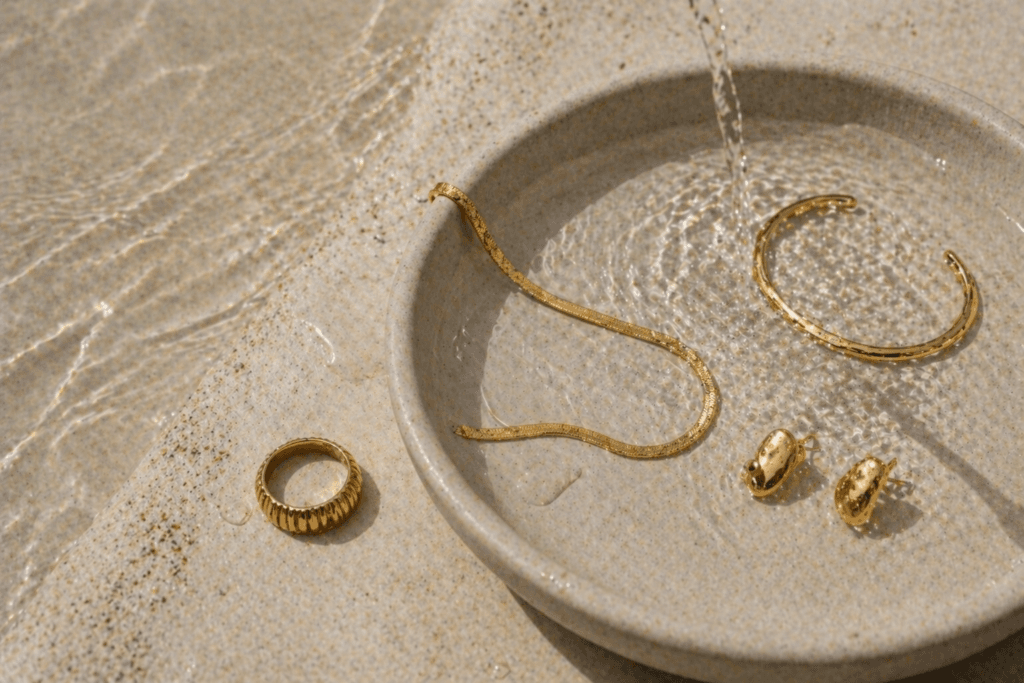
Environments containing salt and chlorine require minimal attention:
- After the beach or pool, rinse with fresh water.
- Wash with mild soap, rinse thoroughly, and dry immediately, especially around clasps and links.
- Avoid storing jewelry while damp; trapped moisture can create a dull film in poorly ventilated areas.
This helps keep the surface clean and stable.
316L vs 304 in Contact with Water
Both are stainless steels; however, 304 does not contain molybdenum. With frequent exposure to chlorides, 316L tends to preserve its surface better and reduce pitting. In dry environments and occasional use, 304 may be sufficient. For daily wear involving sweat, the beach, and swimming pools, 316L is generally more consistent.
Finish and Geometry: Impact on the Appearance of Wear
The same material can age differently depending on its finish:
- Polished: makes fine scratches and water marks more visible; requires careful drying.
- Brushed/blasted: hides fine scratches more effectively but retains more residue within its microtexture.
In addition, pieces with multiple links and internal areas benefit from careful drying to avoid localized dullness.
Common Mistakes with Water and Chemicals
- Assuming that “because it’s stainless steel, it needs no care”: some maintenance is still necessary.
- Using bleach, ammonia, or abrasive products: these can damage the surface.
- Allowing salt or chlorine to dry on the jewelry: this accelerates buildup and dullness.
- Storing pieces while still damp: traps moisture in clasps and inner areas. To learn more about this topic > drying 316L stainless steel: preventing dullness
Quick Questions About 316L Stainless Steel in Water
- Can I shower with my jewelry? Yes. However, soaps and shampoos can leave residue; rinse and dry afterward.
- Does seawater damage it? Under normal conditions, no. The issue arises when salt is allowed to dry without rinsing.
- Is pool water harmful? Chlorine is aggressive; with 316L stainless steel, its effects are minimized by quick rinsing and drying.
- Does sweat cause oxidation? O 316L lida bem com suor; mesmo assim, uma lavagem simples após treino preserva o acabamento.
How MAWAD Selects Jewelry for Humid Environments
At MAWAD, we prioritize 316L stainless steel with consistent finishes and designs that make it easier to cleaning and drying. As a result, the pieces maintain a consistent appearance during daily wear, including in humid environments, with straightforward and minimal maintenance.