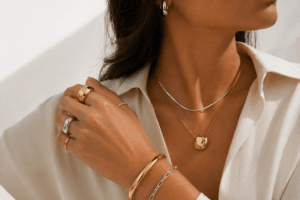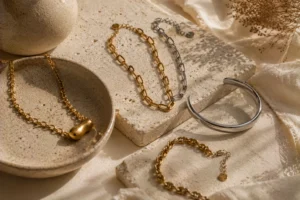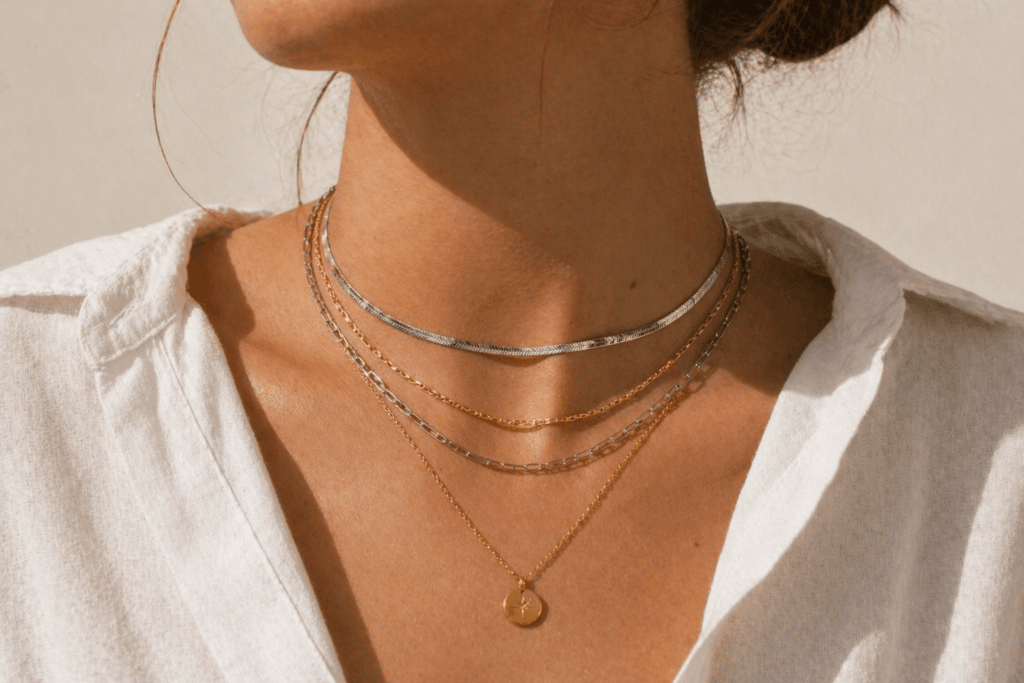
Knowing how to layer necklaces creates visual depth without excess. By adjusting lengths, chain thicknesses, and focal points, you can achieve balanced results for work, leisure, and events. This guide covers practical rules, common mistakes to avoid, and easy-to-recreate layering combinations.
Layering necklaces: the essentials in 30 seconds
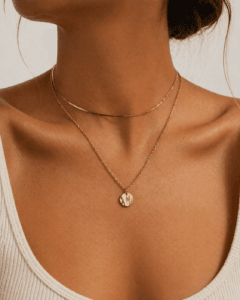
- Wear 2–3 layers for everyday looks; 3–4 for evenings and special occasions.
- Space out lengths: short (35–40 cm), medium (45–50 cm), long (60–80 cm).
- Keep a single focal point per layer (pendant, medallion, plate).
- Alternate chain thicknesses: fine + medium + statement.
- Match the layering to the neckline: V-necks suit V-shaped layers, round necklines work with curved layers, and turtlenecks pair best with longer necklaces.
Lengths That Work Well Together
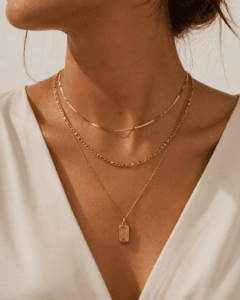
- Choker/short (35–40 cm): opens the composition and creates the first visual line.
- Medium (45–50 cm): acts as the bridge between the short and long layers.
- Long (60–80 cm): elongates the silhouette and draws attention away from the neck. Tip: keep at least 5 cm of difference between layers to avoid a crowded look.
Layering Necklaces with Different Thicknesses
- Simple sequence: fine + medium + fine. Light and balanced.
- Statement sequence: fine + medium + bold. Adds structure and presence.
- Textures: combine classic chains (round links) with rope, curb, Cartier, or snake chains for contrast. Avoid wearing three bold chains together for everyday looks; they work better in more specific styling situations.
Pendants and Focal Points
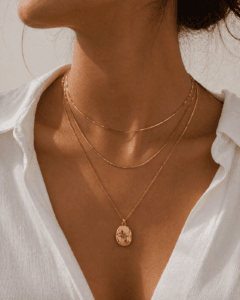
- One pendant per layer prevents visual competition.
- Geometric pendants and simple medallions are versatile; stones and symbols work best in only one or two layers.
- If the pendant is large, reduce the number of layers to avoid visual overload.
Matching Necklaces with Necklines and Collars
- V-neck: align the layers in a V shape (short and medium), with a longer necklace ending above the waist.
- Round neckline: create progressive curves; the final layer can end around the sternum.
- Open shirt: place the medium necklace inside the shirt and the long necklace outside; the short layer can sit close to the neck.
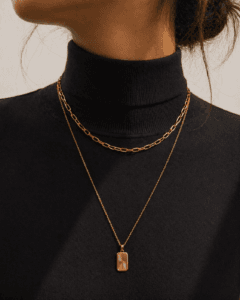
- Turtleneck: wear one medium necklace over the fabric and one longer necklace below the chest; avoid chokers hidden beneath the knit.
Mixing Metals in a Balanced Way
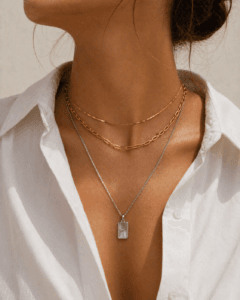
- Follow the 2:1 rule: two layers in the dominant metal (for example, gold) and one layer in the contrasting metal (silver).
- Repeat the metal color in another accessory (earrings/bracelet) to tie the look together.
- If the watch is a strong visual element, choose a chain thickness that complements its presence.
Occasion and Overall Proportion
- Work: 2–3 subtle layers. Lightweight chains and small pendants.
- Casual: 3 layers with mixed textures and one medium-sized pendant.
- Evening: 3–4 layers; include one standout element and keep the remaining layers simple. Final balance: if the clothing already has a strong pattern, reduce the number of layers.
Common Mistakes When Layering Necklaces
- Using the same chain thickness in every layer, which creates a flat look.
- Wearing necklaces of identical lengths, causing tangling and overlap.
- Combining too many large pendants in one stack.
- Ignoring the neckline, which can disrupt proportions and visually shorten the neck.
Quick Questions About Layering Necklaces
- How many layers work best? Generally, 2–3 for everyday wear and 3–4 for evening looks.
- Can I mix gold and silver? Yes; use a 2:1 ratio and repeat the dominant tone in other accessories. Learn more here > mixing gold and silver: 3 rules to get it right
- What if the necklaces keep tangling? Increase the spacing between lengths and position the clasps on opposite sides.
How MAWAD Suggests Layering Necklaces
At MAWAD, we recommend building from simple to statement: a short fine chain, a textured medium-length chain, and finally a long necklace with a single pendant. This sequence works across different necklines and maintains visual balance with minimal effort.