Knowing how to store 316L stainless steel jewelry helps prevent micro-scratches, localized dullness, and tangled chains. With a few simple habits, pieces maintain a consistent finish and stay ready to wear without extra maintenance. This guide focuses on the right materials, separating each piece, and humidity control, all in a simple and practical way.
Storing 316L stainless steel jewelry: the essentials in 30 seconds
- Store each piece in its own pouch or compartment.
- Fasten clasps before storing to prevent tangles and friction.
- Use soft materials (microfiber or cotton) and lined jewelry boxes.
- Keep jewelry dry and well-ventilated; avoid direct heat and excess humidity.
- When traveling, secure your jewelry to prevent it from moving around.
By following these simple steps, storing 316L stainless steel jewelry becomes easy, reliable, and hassle-free.
Storage materials that work
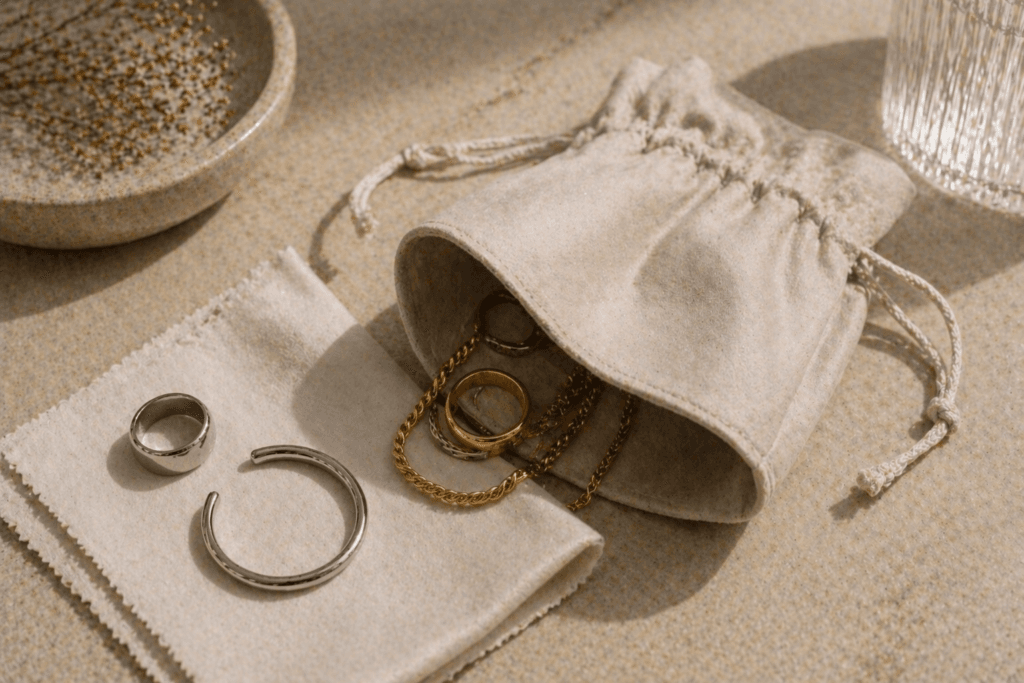
- Microfiber or cotton pouches: protect against fine scratches and dust.
- Lined jewelry boxes with separate compartments: reduce metal-to-metal contact.
- Polyethylene or polypropylene zip bags (for short-term travel): practical for keeping pieces separate, as long as they are completely dry.
- Desiccants inside a drawer or jewelry case (without direct contact with the jewelry): help control moisture and humidity.
Avoid PVC and materials that release plasticizers, as they can leave a residue on the jewelry. Also avoid rough felt linings, which may cause abrasion over time.
Separating and securing jewelry: the right way to store necklaces, earrings, and bracelets
Keeping each piece securely in place helps reduce friction and prevent tangles. In addition, fastening clasps and keeping matching components together helps avoid unnecessary wear.
Storing 316L stainless steel jewelry: keeping necklaces tangle-free
- Fasten the clasp and lay the necklace flat in a long compartment.
- In jewelry cases with hooks, hang the necklace and secure the end to prevent it from swinging.
- For delicate chains, wrap them in soft tissue paper or a protective sleeve and secure the ends. This is a quick and practical solution for travel.
Earrings: keep pairs together and backs secured
- Store each pair together, with the backs fastened onto the posts.
- Use earring cards, organizers with holes, or small boxes that keep the posts securely in place.
- For long earrings, rest the dangling part on a soft surface to help prevent bending and scratching.
Bracelets: prevent friction and loose clasps
- Fasten the clasp before storing.
- Keep each bracelet in its own pouch or in a compartmentalized tray, without overlapping other pieces.
- For rigid bangles and cuffs, avoid lateral pressure inside the jewelry box.
Humidity, heat, and light: controlling the environment
- Keep jewelry in a dry, stable place: drawers or jewelry boxes with desiccants can help control moisture. Replace the desiccant packets as needed.
- Keep away from direct heat: storing jewelry away from radiators and intense sunlight helps prevent expansion, residue buildup, and surface dullness.
- Allow moderate ventilation: open the jewelry box occasionally to prevent trapped moisture from accumulating around clasps, links, and hidden areas.
As a result, the surface stays cleaner and maintains its appearance for longer.
Travel: storing 316L stainless steel jewelry without scratches
- Use travel jewelry cases with straps, holders, or rolls that keep pieces securely in place.
- Store each piece in a separate soft pouch before placing it inside the main case.
- For longer trips, place a desiccant packet inside the compartment (without direct contact with the jewelry).
This helps minimize movement, friction, and moisture buildup during travel.
Avoiding common mistakes when storing 316L stainless steel jewelry
- Storing multiple pieces in the same pouch: increases friction and the risk of fine scratches.
- Putting jewelry away while still damp after the beach, pool, or a workout: can lead to localized dullness and residue buildup.
- Leaving clasps unfastened: increases the chance of tangles and unnecessary wear at connection points.
- Using rough fabrics or unlined hard boxes: may cause scratches when storing or removing pieces.
- Allowing direct contact with desiccant packets: can leave marks on surfaces; always keep them separate from the jewelry.
Quick questions about storing 316L stainless steel jewelry
- Can I use an open jewelry stand on a dresser? Yes, as long as it is not exposed to direct sunlight and you clean off dust regularly.
- Do zip bags work well? For short periods and dry pieces, they do; for long-term use, fabric pouches are preferable.
- É necessário usar produtos anti-oxidação? O 316L não escurece como prata; o mais importante é evitar humidade acumulada, poeira e atrito entre peças.
- Should I hang necklaces? It can be a practical option, but secure the ends to prevent swinging and avoid constant exposure to light and dust.
How MAWAD recommends storing 316L stainless steel jewelry
At MAWAD, we recommend storing each piece separately, keeping clasps fastened, and using soft materials such as microfiber or cotton. We also suggest maintaining moderate humidity control in drawers and jewelry boxes, along with using travel cases that keep pieces securely in place. With these simple habits, storing 316L stainless steel jewelry becomes both easy and effective.