What is 316L stainless steel jewelry, why is it so popular, and when does it make the most sense for everyday wear? This guide explains, in a straightforward way, the characteristics of 316L stainless steel, its real benefits, and how to get the most out of MAWAD pieces with minimal maintenance and no complicated care routine..
What Is 316L Stainless Steel?
316L stainless steel is an alloy of iron, chromium, nickel, and molybdenum with a low carbon content (the “L” stands for low carbon). Thanks to molybdenum, corrosion resistance is significantly increased, especially in chloride-rich environments (humidity, sweat, and sea air). The result: 316L stainless steel jewelry maintains stable color and finish during everyday wear, including outdoor activities.
Why is it so widely used?
316L stainless steel has become one of the most widely used materials in jewellery because it offers a balance that is difficult to find in other metals. It combines good corrosion resistance, low maintenance and high durability, maintaining its appearance even when exposed to moisture, sweat and frequent wear. In addition, it adapts to different styles and finishes, making it possible to create pieces for everyday wear without requiring constant care.
Real Benefits of 316L Stainless Steel Jewelry
- Water resistance: tolerates fresh and salt water, does not rust easily, and does not lose color from splashes, rain, or showering. After exposure to the sea or pool, rinsing with fresh water is recommended.
- Durability: high surface hardness and good resistance to everyday scratches. Maintains its shine and finish for long periods.
- Hypoallergenic: low nickel release compared to other alloys. It is generally well tolerated by sensitive skin.
- Low maintenance: does not require frequent polishing. Occasional cleaning with warm water and soap is sufficient.
- Modern appearance: polished or brushed finishes with a contemporary look that remains stable over time.
Why Choose 316L Stainless Steel Jewelry?
- For those who want versatile jewelry that can handle work, the gym, the beach, and city life.
- For gifts that maintain their original appearance for years.
- For sensitive skin that reacts to standard fashion jewelry.
316L vs Other Materials (What Changes in Practice)
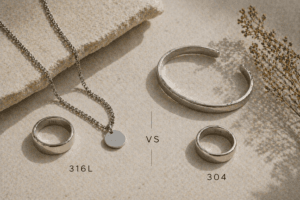
316L vs 304 Stainless Steel
Compared to 304 stainless steel, 316L contains molybdenum and less carbon, resulting in better resistance to corrosion and sweat. Learn more in this article: 316L vs 304 stainless steel: differences in jewelry
316L vs 925 Sterling Silver
When it comes to 925 sterling silver, it is a precious and highly malleable metal, but it tarnishes over time; 316L stainless steel retains its color and requires less maintenance.
316L vs Plated Fashion Jewelry
With plated metals, the coating can wear away and expose the base material; with 316L, the color and finish are part of the material itself and do not peel.
316L vs Titanium
Titanium is lighter in weight, while 316L offers a brighter shine and an excellent balance of durability and value for everyday wear.
How to Clean 316L Stainless Steel Jewelry
- Wash with warm water and mild soap; rinse and dry with a soft cloth.
- Avoid harsh chemicals (bleach and aerosols). After swimming in the sea or pool, rinse with fresh water.
- Store separately from highly abrasive pieces to help minimize micro-scratches. Learn the proper way to store 316L stainless steel jewelry here.
Quick Questions
- Can it get wet? Yes. 316L stainless steel is resistant to water and sweat. After exposure to the sea or a swimming pool, rinse it with fresh water. Learn more here: 316L stainless steel and water: resistance to sweat and salt air in jewelry
- Is it completely hypoallergenic? No metal is 100% risk-free, but 316L stainless steel is generally well tolerated by most people with sensitive skin. Learn more in this article > 316l stainless steel and sensitive skin: how it performs.
- Does it lose its color? No. The finish (polished or brushed) is part of the material itself, not a surface coating that can peel away.
- Does it need polishing? Rarely. Simple cleaning restores shine in most cases.