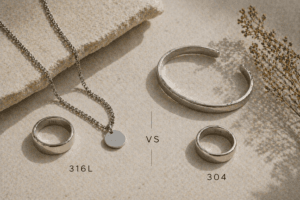
Under normal conditions, stainless steel jewellery rarely rusts, especially when made from 316L stainless steel.
Rust requires unprotected iron; 316L forms a passive chromium layer that inhibits oxidation.
Brownish stains are usually external deposits (salt, cosmetics or iron particles), rather than rust from the metal itself.
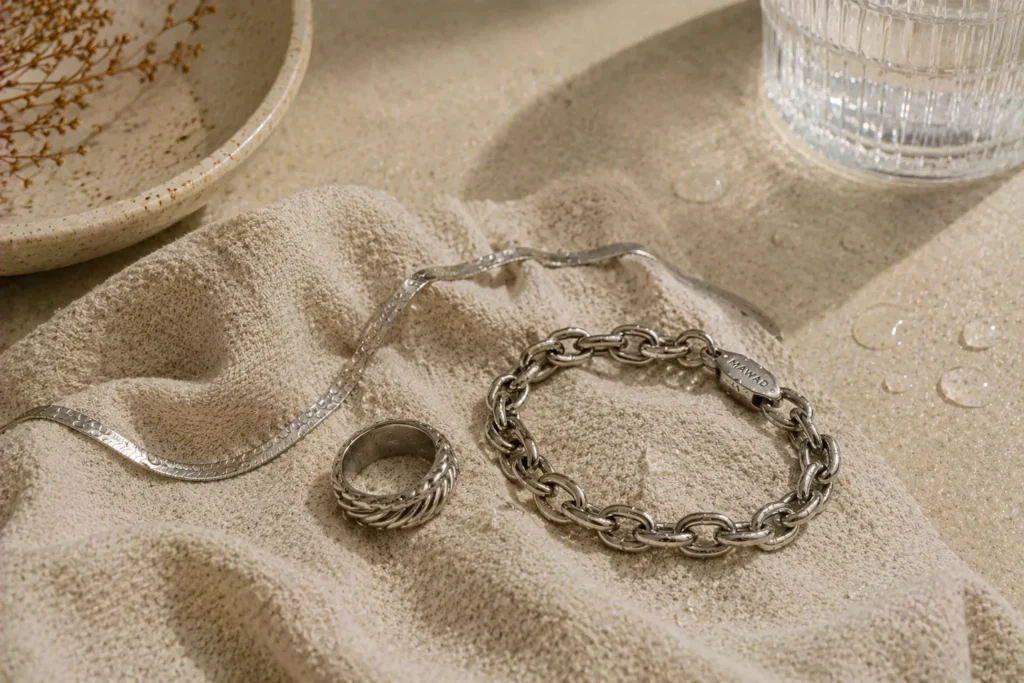
Rinsing after the beach or pool, cleaning with warm water and mild soap, and drying with a microfibre cloth helps prevent marks and preserve shine.
Do stainless steel jewellery pieces rust?
In practice, 316L stainless steel jewellery – the standard alloy used by MAWAD – is highly resistant to rust in everyday use. 316L creates a passive layer on the surface that prevents the oxidation typically seen in exposed iron. What may sometimes appear are stains or a loss of shine caused by accumulated residues, which can usually be removed with simple cleaning and drying.
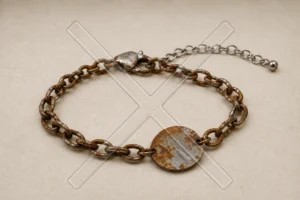
What is “rust” and why does 316L behave differently?
- Rust is the common term for iron oxides that form when iron reacts with oxygen and moisture.
- In non-stainless metals, this oxidation progresses, weakening the piece and changing its colour.
- In 316L stainless steel, the chromium in the alloy reacts with oxygen to form a very thin and stable passive layer. This layer protects the metal from its environment, interrupting the corrosion process that would otherwise lead to visible rust.
- In addition to chromium, 316L contains molybdenum, which increases its resistance to environments containing chlorides (salts), commonly encountered in everyday jewelry wear.
Why 316L stainless steel rarely rusts
- Self-healing passive layer: common micro-scratches from everyday wear become protected again when the exposed surface reacts with oxygen in the air.
- Low carbon content: helps preserve the integrity of the passive layer over time.
- Molybdenum in the alloy: improves resistance to localized corrosion in humid and salty environments.
- In practice: with everyday exposure to water, sweat, rain, and washing, 316L maintains its metallic color without showing signs of rust.
When can stains or localized spots appear?
Even with its high resistance, there are situations that can cause marks that may be mistaken for rust:
- Salt deposits: seawater and sweat can leave salt crystals behind after evaporation. These deposits can trap moisture and surface dirt, causing stains.
- Cosmetics and perfumes: these can form a dull film that traps dust and affects the jewelry’s shine.
- External iron contamination: prolonged contact with carbon steel particles (tools, steel wool, or metal dust) can leave iron residues on the jewelry. These particles can oxidize, creating “brown spots” without the 316L itself rusting.
- Corrosion in small areas: this can occur in tight areas of the jewelry where dirt, moisture, or salt accumulates for long periods. It is very rare in jewelry and can usually be prevented with regular cleaning.
- Harsh chemicals: bleach, strong cleaning products, concentrated acids, or poorly balanced pool chemicals can cause stains or surface damage.
How to treat persistent stains (without damaging the piece)
- Step 1 – wash: use warm water and mild soap, gently brush, rinse, and dry.
- Step 2 – focus on specific spots: for stubborn areas, gently brush for 20–30 seconds without applying too much pressure.
- Step 3 – check: if the stain was caused by an external deposit, it should disappear or become noticeably lighter.
- Step 4 – targeted cleaning: if the stain persists, use a mild household stainless steel cleaner designed for stainless steel surfaces. Test it first on a less visible area, apply with a soft cloth, remove the product completely, and dry thoroughly.
If the spots do not disappear, contact customer support with clear photos for further assessment. In rare cases of localized surface corrosion, the piece may benefit from professional polishing.
Gold pieces: can PVD rust?
- The PVD (Physical Vapor Deposition) coating provides a highly stable and durable gold finish. The base material remains corrosion-resistant 316L stainless steel.
- Rust is uncommon on PVD-coated pieces. With very intensive use, the coating may gradually wear in areas exposed to greater friction, revealing the metallic color of the 316L underneath - without rust.
- To help preserve the color for longer: reduce continuous friction, clean with water and mild soapand avoid abrasive substances.
Everyday wear: shower, sea, pool, and gym
- Showering and frequent washing: 316L handles water and mild soaps well; drying after each contact helps maintain its shine.
- Beach: salt and sand can build up on the surface. Rinsing with fresh water and drying at the end of the day helps prevent stains and micro-abrasions.
- Pool: chlorine at normal levels should not cause rust; however, rinsing and drying are recommended to remove any residual chemicals.
- Gym and sweat: sweat contains chlorides. Cleaning and drying the jewelry after a workout helps prevent buildup and preserve its finish.
Signs to look out for and what they may mean
- Brown stains that come off easily: these are usually residues or external deposits, rather than rust from the jewelry itself.
- Small spots that are harder to remove: these may be iron particles transferred from other surfaces. Try gentle cleaning and, if necessary, use a product specifically designed for stainless steel.
- Jewelry that looks dull: this may be caused by everyday wear, small marks, or a buildup of creams and cosmetics. A thorough cleaning will usually restore its shine.
- Gold color starting to fade: this means the PVD coating is gradually wearing with use. The material underneath is still 316L stainless steel.
Direct comparison: 316L stainless steel vs metals that tarnish or rust
- 316L stainless steel: highly resistant to corrosion and low maintenance; suitable for everyday wear, including humid environments.
- Silver: tends to tarnish due to sulfidation and requires polishing and specific cleaning products more frequently.
- Common non-stainless metals: can oxidize or rust quickly when exposed to moisture and sweat.
316L “rust” prevention checklist
- Rinse with fresh water after going to the beach or pool.
- Wash periodically with water and mild soap, then dry with a soft cloth.
- Avoid harsh chemicals and abrasive materials.
- Store your jewelry clean and dry, preferably keeping each piece separate.
- Avoid contact with steel wool, metal filings, or other metallic particles.
Frequently Asked Questions:
Do stainless steel jewellery pieces rust?
With 316L stainless steel, rust is very unlikely under normal conditions of use. Many stains that look like rust are actually residues or particles deposited on the surface.
Can I wear stainless steel jewelry in the sea?
Yes. Afterward, we recommend rinsing with fresh water and drying thoroughly to remove salt residue.
What about in the pool?
Yes. After contact with chlorinated water, rinse the jewelry with fresh water and dry it thoroughly.
Do I need a specific product to clean my jewelry?
Usually, no. Warm water, mild soap, and a soft cloth are enough for regular cleaning.
Can gold PVD jewelry oxidize?
PVD coating is highly resistant. Over time and with significant friction, some color wear may occur, but this does not mean that the 316L stainless steel underneath is rusting.
To finish: if you’re looking for durable, easy-to-care-for jewelry designed for everyday wear, discover MAWAD’s 316L stainless steel pieces.